Cold at the top
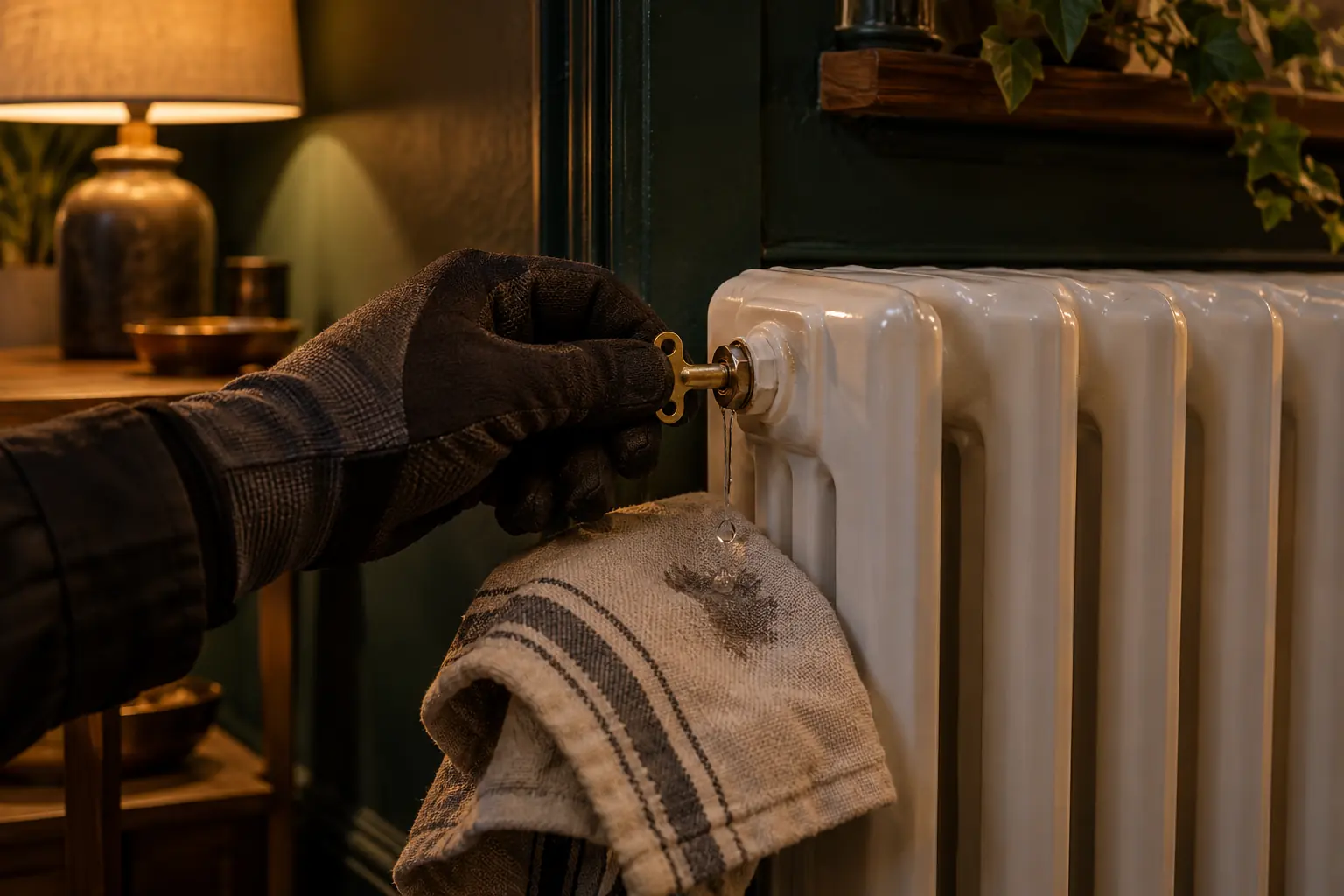
A radiator that's cold at the top and warm at the bottom has air in it. Bleeding the radiator lets the air out.
Cold at the bottom or in the middle
Cold patches at the bottom, or in the middle, usually mean sludge: a build-up of rust and debris that settles in radiators over the years and blocks the flow. Bleeding won't fix that.
Signs of sludge
- Cold spots on radiators while the heating is on
- Dark or murky water when you bleed a radiator
- A boiler making loud clanging noises
- Heating that's slow to warm the house
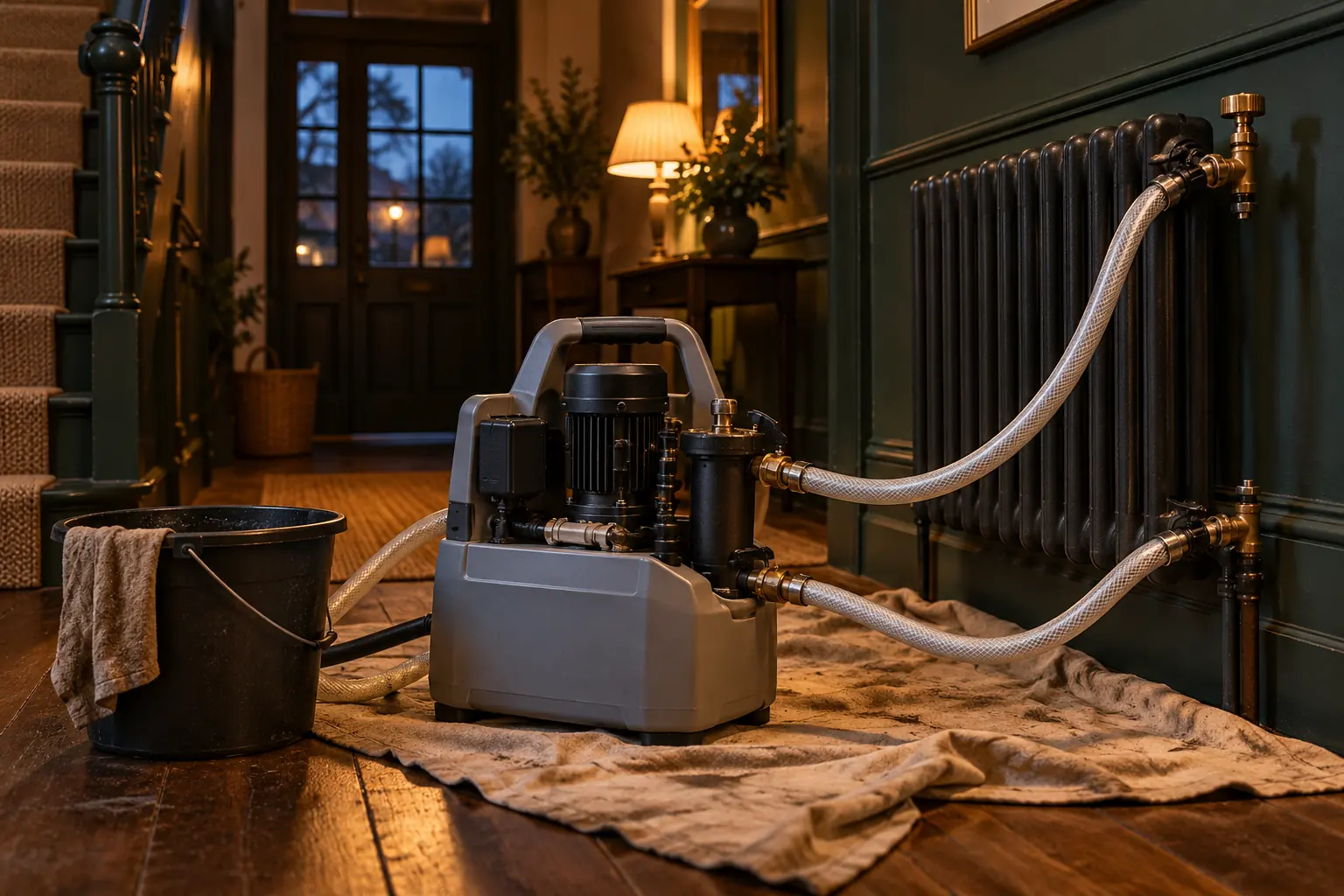
What a power flush does
A power flush pushes water and a cleaning agent through the system at high flow, radiator by radiator, until it runs clear. An inhibitor then goes in to protect the system. The radiators heat evenly again and the boiler doesn't have to work as hard.
Before winter
Put the heating on for a while in early autumn, before you need it. Walk round and feel each radiator, look at the pipework for any drips, and bleed any radiators with cold tops. If you find cold spots, get in touch.
Got a question this guide didn't answer?
Ask us on WhatsApp