Have it serviced once a year
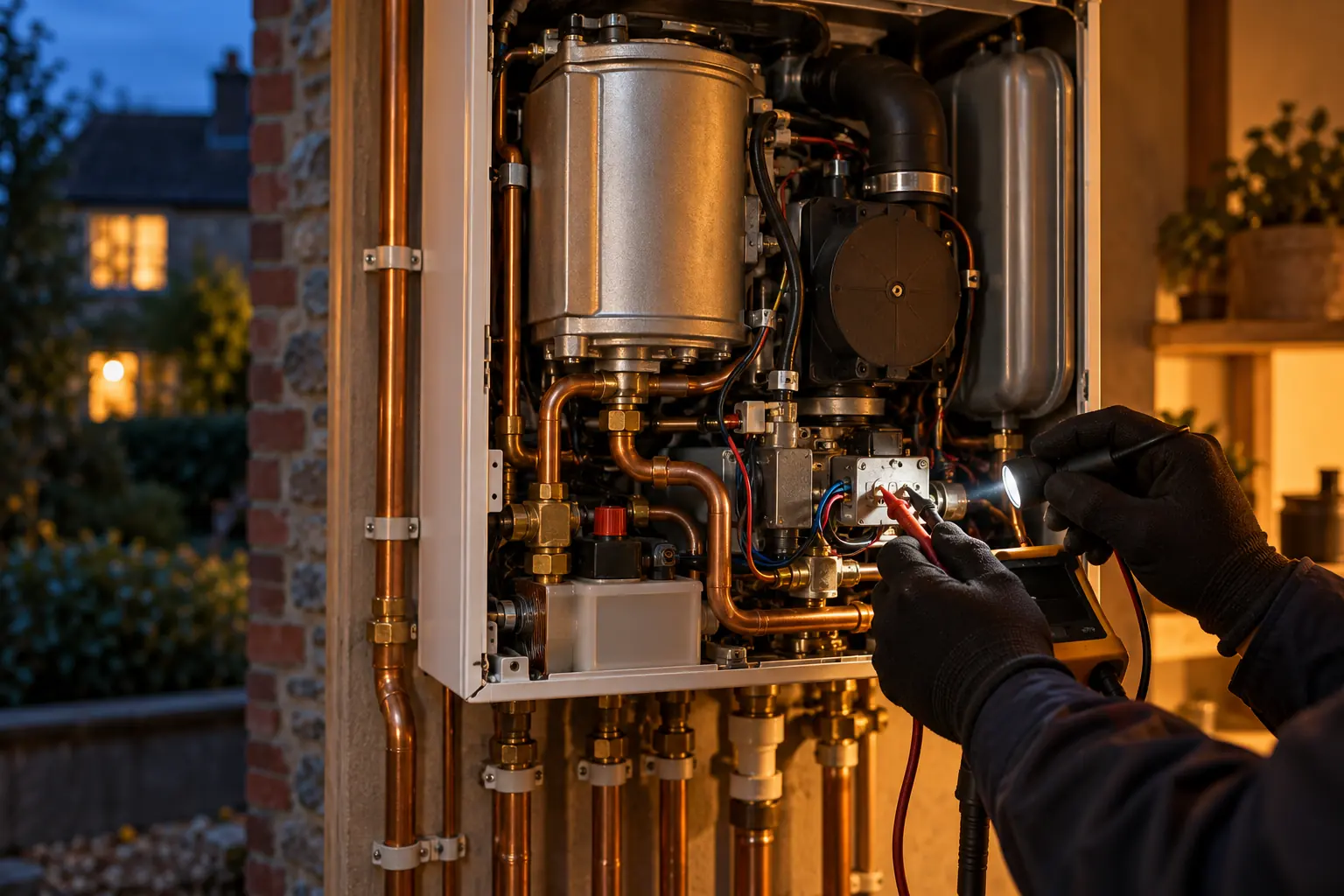
An annual service by a Gas Safe registered engineer keeps your boiler safe, catches worn parts before they fail and keeps it running efficiently. Manufacturers usually ask for a yearly service too.
If you let a property, the law requires a yearly gas safety check on the gas appliances and flues you provide. That's a separate check from a service.
Keep an eye on the pressure
Most boilers have a pressure gauge on the front or underneath. Your boiler's manual gives the right range. If the pressure keeps dropping, there may be a leak, and if it's too high, something else needs looking at. Either way, give us a call.
Bleed your radiators
If a radiator is cold at the top and warm at the bottom, there's air trapped in it. With the heating off and the radiator cool, open the bleed valve with a radiator key until water appears, then close it. Check the boiler pressure afterwards.
What the noises mean
A boiler that's started making new noises is telling you something.
- Kettling or rumbling: often limescale or sludge on the heat exchanger
- Gurgling: usually air in the system or low pressure
- Banging or clunking: trapped air, sludge or a pump problem
- Whistling: often a blockage restricting the flow
Keep the area clear
Don't store things against the boiler or block its vents, and keep the flue outside clear of plants and clutter.
If you smell gas
Turn off the gas supply at the meter if you can, open the windows, don't use switches or flames, leave the property and call the National Gas Emergency number on 0800 111 999.
Got a question this guide didn't answer?
Ask us on WhatsApp