What a heat pump is
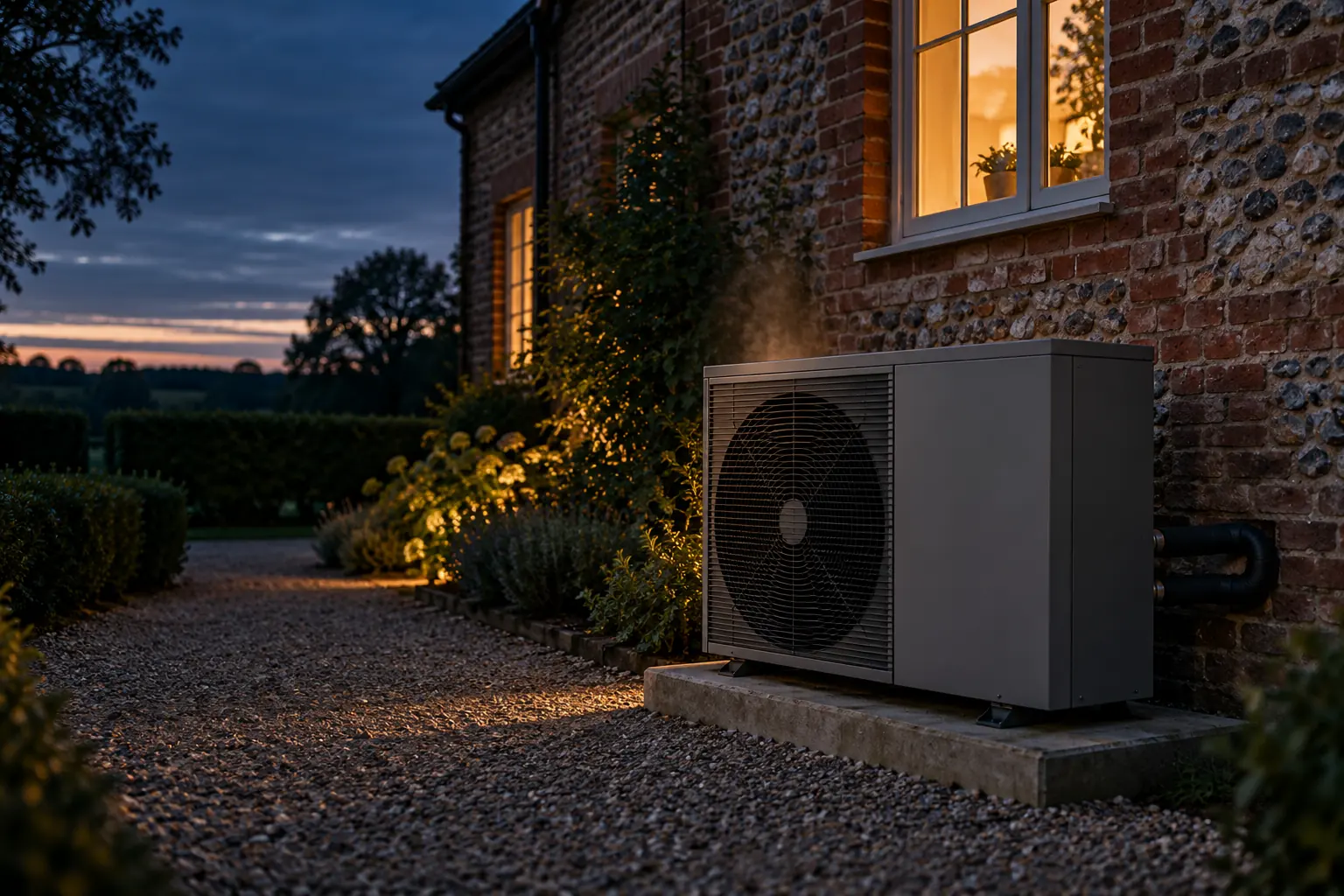
An air source heat pump is an outdoor unit that takes heat from the air, even on a cold day, and moves it into your home. It uses electricity to run its fan and compressor, but it moves more heat than the electricity it uses.
It usually stands at the side or back of the house, on a plinth or feet, with two insulated pipes running through the wall to the heating system inside.
Air source and ground source
Air source heat pumps take heat from the outside air. Ground source heat pumps take it from pipes buried in the garden, which needs a lot of outdoor space and digging. For most homes, an air source heat pump is the practical choice: all it needs is a spot on an outside wall with room for air to flow around it.
How it heats your home
An air-to-water heat pump heats water for your radiators or underfloor heating, and heats your hot water cylinder. It works at a lower water temperature than a boiler, over longer periods, which is why the radiators and pipework are sized for it.
- Radiators, often larger than boiler-sized ones
- Underfloor heating, which suits low water temperatures
- A hot water cylinder for baths and showers
Why every installation starts with a heat loss calculation
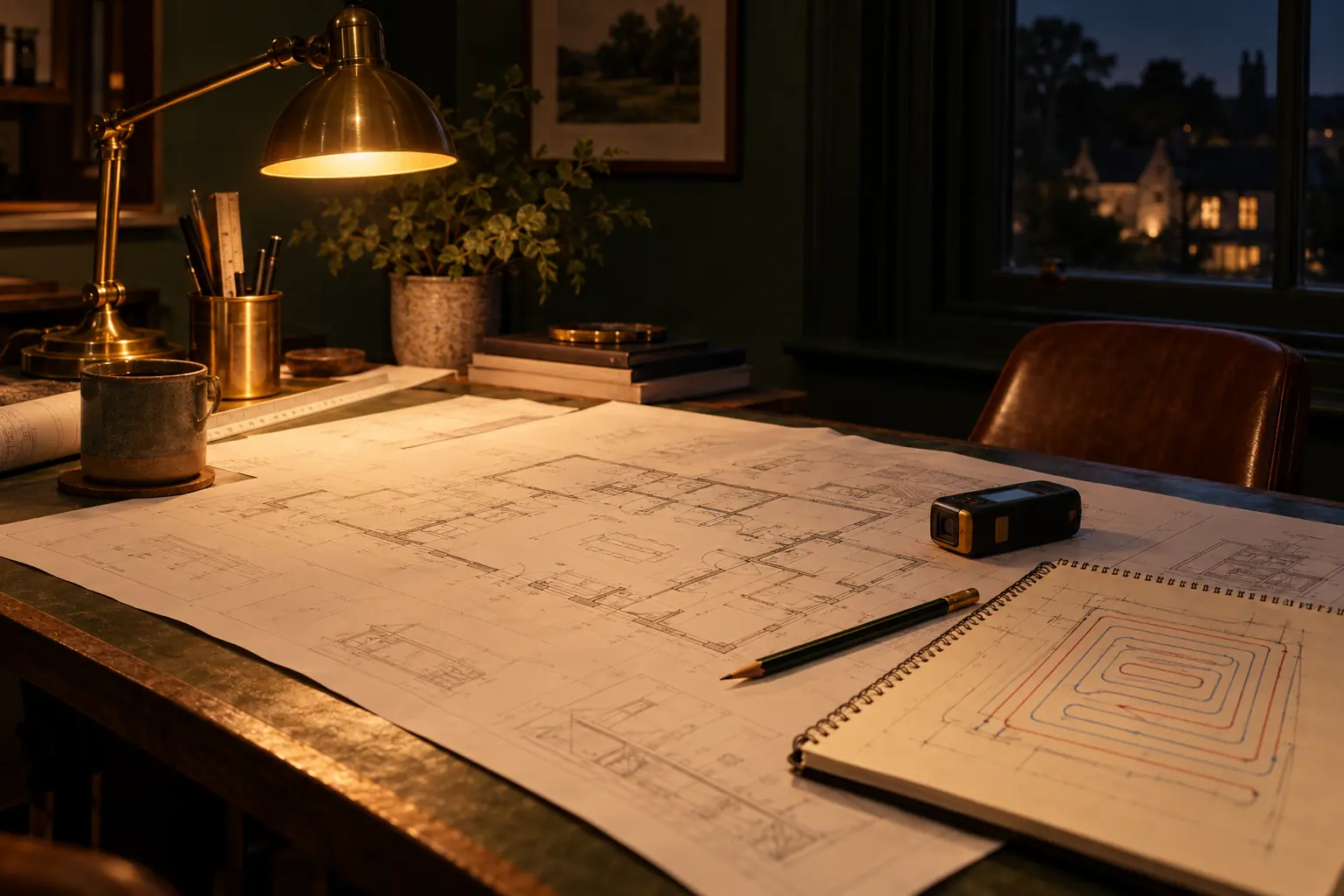
Before choosing a heat pump, your installer should visit, measure the house and calculate the heat loss of each room. That tells them how much heat every room needs on the coldest days, which decides the size of the heat pump, the cylinder and each radiator.
A heat pump that's too small leaves rooms cold, and one that's too big runs inefficiently. The calculation is how you get it right.
Choosing an installer
Look for an MCS certified installer. MCS is the scheme that sets the standard for designing and installing heat pumps in the UK. We are MCS certified, and we carry out full heat loss calculations so the system is sized correctly.
Got a question this guide didn't answer?
Ask us on WhatsApp